
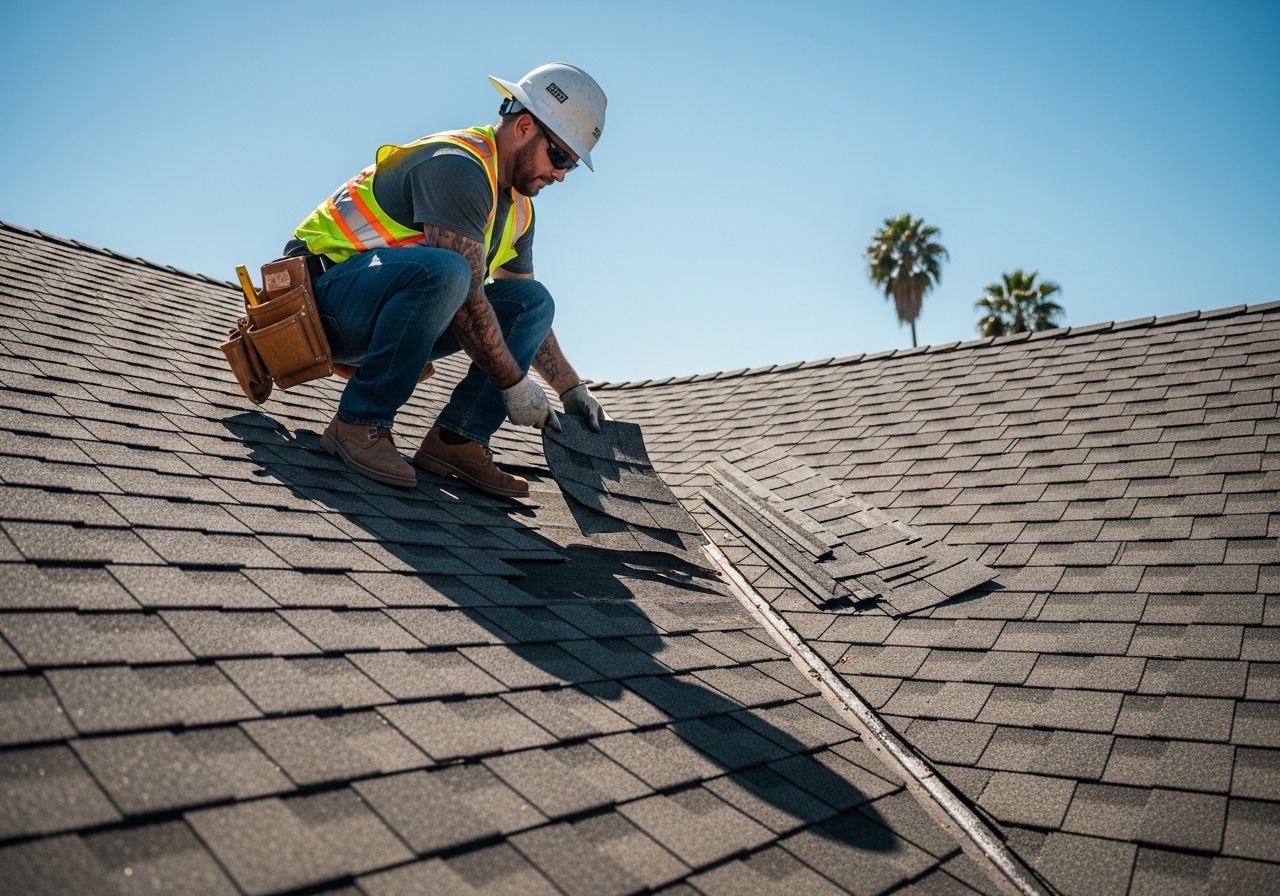
Soffit & Fascia Repair in Los Angeles
The fascia is the flat board that runs along the edge of your roof, right where the roofline ends. Your gutters bolt straight to it. The soffit is the panel that closes off the underside of the roof overhang, the part you see when you stand under the eave and look up. Together they finish the edge of the roof and keep weather, animals, and moisture out of the space behind them.
Most LA homeowners never think about either one until paint peels, a gutter starts to sag, or a bird gets into the attic. By then the rot is usually wider than it looks from the street. We repair and replace soffit and fascia across Los Angeles, from a single rotted section behind a leaking gutter to a full perimeter on a 1960s house that has never had the wood touched. Free inspection, a clear written price, and no pressure to do more than the board actually needs.
Why Soffit and Fascia Rot in LA
LA roofs do not get the freeze damage that wrecks wood back east. The damage here comes from two directions, and a third on the coast.
The first is the rainy season. From November through March, gutters that are clogged or pitched wrong spill water straight down the fascia instead of carrying it away from the house. A few winters of that soaks the board and rot sets in behind the gutter where you cannot see it.
The second is heat and sun. Long dry summers in the San Fernando Valley bake old paint until it cracks. Once the seal breaks, the next rain gets into the bare wood. Homes in Van Nuys, Reseda, and Northridge sitting on original 1960s fascia almost always show this pattern, soft board under paint that looks fine from the driveway.
The third is the marine layer on the westside. Mar Vista and Santa Monica homes near the coast hold damp longer in the morning, which keeps shaded soffit panels wet and slows the wood’s chance to dry out. Add the hillside access in Eagle Rock and Mount Washington, where a crew works off long ladders on a slope, and you have most of the reasons LA eaves need work.
Soffit & Fascia Repair Cost in Los Angeles
Here is what the work actually costs in LA, measured by linear foot of board. These cover removing the rotted piece, prepping the rafter tails, installing the new material, and priming or wrapping it.
| Material | Cost Per Linear Foot (Installed) |
|---|---|
| Wood fascia (pine, fir, or cedar) | $6 - $14 |
| Vinyl fascia | $8 - $16 |
| Aluminum fascia wrap | $8 - $20 |
| Fiber cement fascia | $10 - $25 |
| Wood or vinyl soffit | $8 - $20 |
| Vented aluminum soffit | $10 - $22 |
The prices on this page are estimates. Your final price is the one in your written proposal.
A typical single-story LA home has 150 to 200 linear feet of fascia. That puts a full perimeter replacement between $1,500 and $4,000 for most homes, depending on the material you pick and how hard the boards are to reach.
Spot repairs cost less. Replacing one 8-foot rotted section behind a leaking gutter usually runs $300 to $800, depending on access. Two-story fascia and hillside lots that need scaffolding add $400 to $900 for the setup. If the rot reached the rafter tails behind the board, cutting back and sistering each tail adds $75 to $200 per rafter. For the full breakdown of what drives the price up or down, read our soffit and fascia repair cost guide.
Signs Your Fascia or Soffit Is Rotted
Rot rarely announces itself. It creeps along the board behind the gutter and shows up as small clues before the wood gives out. Here is what tells us a board needs to come off.
Peeling or bubbling paint. When the seal breaks, moisture works into the wood and pushes the paint off from behind. Paint that flakes in one spot on the fascia is often the first thing you can see from the ground.
Soft or flexing board. Press the fascia and a healthy board stays firm. A rotted one gives, feels spongy, or dents under a thumb. A section that flexes when the gutter above it fills during a storm has lost its structure.
Dark stains and streaks. Water tracking down the wood leaves dark discoloration, usually running vertically below a gutter joint or a spot where the drip edge failed.
Birds, wasps, or squirrels in the eave. Animals getting into the soffit means there is already an opening. A rotted or missing soffit panel is an open door into the attic, and nesting makes the damage worse fast.
A sagging gutter. Gutters bolt to the fascia. When the wood behind them softens, the fasteners lose their grip and the gutter starts to pull away or dip. A gutter that has sagged in one spot often has rotted fascia hiding right behind it.
The Soffit and Fascia Repair Process
Fascia and soffit work follows the same order on almost every job, whether it is one section or the whole perimeter.
Pull the gutter. The gutter bolts to the fascia, so it comes off first. We detach the run carefully so we can rehang the same gutter if it is in good shape, or set it aside if you are replacing it at the same time.
Remove the rotted board. Off comes the old fascia, and the soffit panel where needed. This is the point where the real damage shows up. Water tracks along the board, so the rot almost always runs longer than what you could see from the ground.
Inspect and repair the rafter tails. With the fascia off, we check the ends of the rafters behind it. If water reached them, we cut back the damaged wood and sister a new tail onto the sound rafter so the new fascia has solid framing to nail into. This runs $75 to $200 per rafter and is worth doing right, since new fascia on rotted framing loosens within a couple of years.
Install the new material. New fascia and soffit go up in your chosen material, cut to length and fastened into sound wood. Vented soffit panels go back in wherever the attic needs the airflow.
Prime, paint, or wrap. Bare wood gets primed and painted to seal it against the next rainy season. If you chose aluminum wrap, we wrap the fascia so it never needs paint again. Fiber cement gets caulked and finished at the seams.
Rehang the gutter. The gutter goes back on the fresh fascia, re-pitched to drain toward the downspout so water leaves the roof the way it should instead of pooling and starting the rot over.
Repair or Replace the Whole Perimeter?
This is the question every homeowner asks, and the honest answer depends on how much of the board is bad.
If the rot sits in one section and the rest of the fascia is solid, a spot repair is the right call. There is no reason to tear off 180 feet of good wood to fix 8 feet. We replace the bad run, blend it into the sound board, and you are done for a few hundred dollars.
But if the fascia is original to a 50-year-old house and you find soft spots in three or four places, replacing the whole run usually costs less per foot and lasts longer. Doing it piecemeal over several years means paying the setup, the gutter removal, and the cleanup every single time. Roll those into one job and the per-foot cost drops.
When fascia rot shows up next to active roof leaks or badly sagging gutters, it is worth having the whole roof edge looked at together. Our roof repair team handles the fascia, the drip edge, and the gutter line as one system so water actually clears the roof. A roof inspection checks the soffit and fascia from the ground as part of every visit, so if you are not sure how far the damage runs, that is the place to start.
How Soffit and Fascia Tie Into Gutters and Attic Airflow
Soffit and fascia are not standalone trim. They are part of how the roof edge sheds water and how the attic breathes, and skipping that connection is how the rot comes back.
The fascia is the mounting surface for your gutters. If you hang new gutters on old rotted fascia, the fasteners never get a solid grip and the system loosens within a couple of years. That is why we check fascia condition before any gutter installation and replace bad board first. Fresh fascia behind a properly pitched gutter is what keeps the wood dry through the next rainy season.
The soffit does a second job most people miss. Vented soffit panels pull fresh air into the attic along the eaves, and that air carries heat and moisture up and out through the ridge vent. Block the soffit venting, or replace vented panels with solid ones, and you trap heat under the roof. Trapped attic heat bakes the underside of the decking and ages the shingles from below. When we replace soffit, we keep the venting your attic needs, and if the eave vents were clogged or painted shut, we open them back up.
Schedule a Free Soffit and Fascia Inspection
Soffit and fascia repair is one of those jobs that costs far more the longer you wait, because rot spreads along the board and into the rafters behind it. Catching it early keeps a $500 fix from turning into a $3,000 one.
Call (818) 491-7862 for a free inspection and a clear written estimate on your soffit and fascia repair anywhere in the greater Los Angeles area. We measure the run, check the rafter tails and the gutter line, and give you a fixed price with the material and linear footage spelled out. We serve LA County top to bottom, from Van Nuys and Reseda through Mar Vista, Santa Monica, Eagle Rock, and the South Bay.