
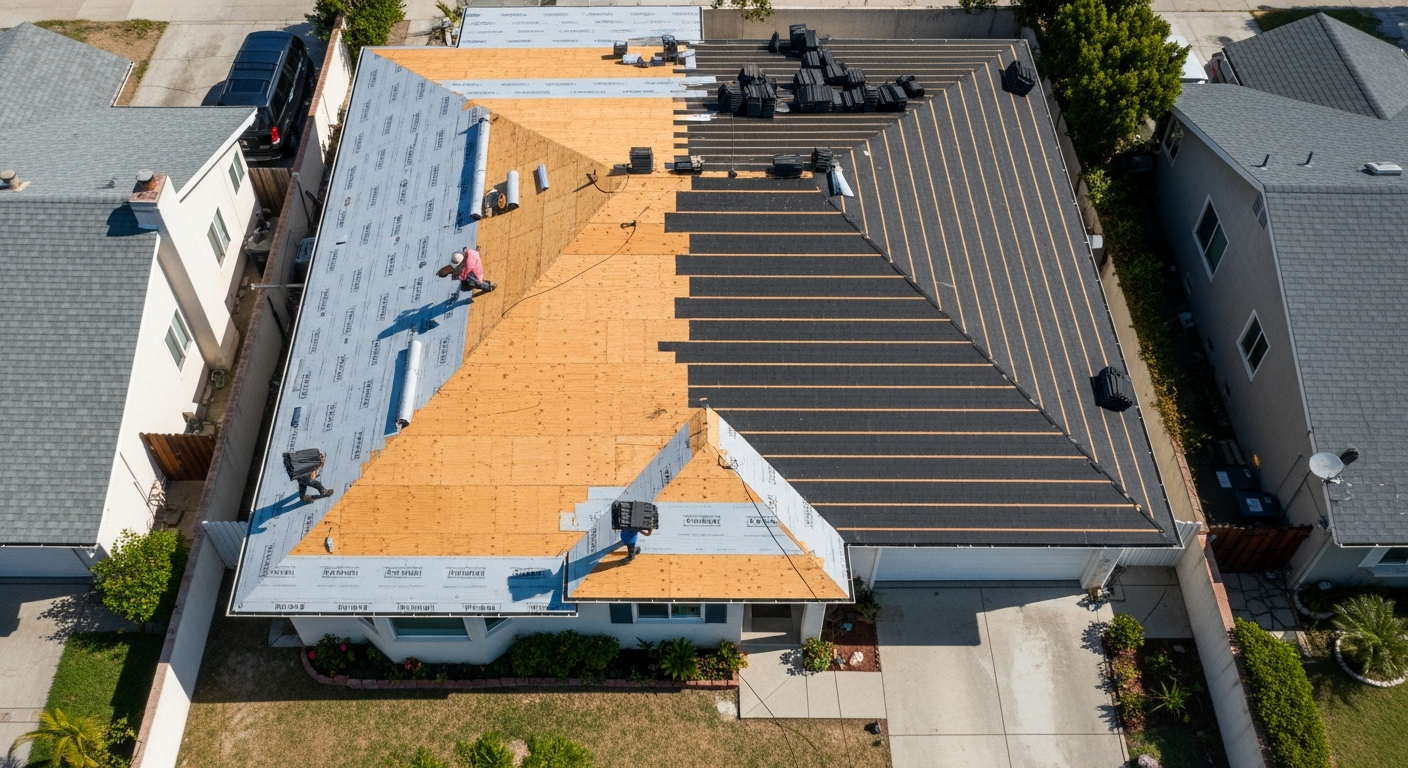
When repairs stop making sense, it is time for a new roof
Every roof has a lifespan. Asphalt shingles last 20 to 30 years in LA’s climate, and the heat in the San Fernando Valley can shorten that to 18 to 22 years on south-facing slopes. Tile can go 40 to 75 years. When yours is past that point, or when you are spending more on patches than a new roof would cost, a roof replacement is the smarter investment.
We have replaced over 1,500 roofs across Los Angeles. We do full tear-offs, not overlay shortcuts, because layering new shingles over old ones hides rot and voids most manufacturer warranties. This page walks through what a replacement costs in 2026, how the process works, which materials fit LA homes, and what the city requires. If you are still weighing whether you even need a new roof yet, start with our roof repair vs replacement guide.
Signs you need a full roof replacement
A single leak does not mean you need a new roof. Widespread failure does. Get a professional roof inspection if you are seeing more than one of these:
- Age past the material’s service life. Asphalt over 20 to 25 years, tile with original underlayment past 20 to 30 years.
- Repeated repairs. You are calling for a patch every year or two, and the bills are stacking up without extending the roof’s life.
- Widespread granule loss. Bald shingles and granules collecting in the gutters mean the asphalt layer is drying out across the whole roof, not in one spot.
- Multiple leaks in different areas. Isolated damage is a repair. Leaks in three rooms is a system that has run out of runway.
- Sagging or soft decking. A dip in the roof line or spongy plywood points to structural moisture damage under the surface.
- Two existing layers already. Code limits how many layers a roof can carry, and a second overlay is rarely worth it.
Our post on the 7 signs you need a new roof covers each of these in more detail, with photos of what to look for from the ground.
How much does a roof replacement cost in Los Angeles?
A full roof replacement in LA runs $12,000 to $45,000 in 2026. Where you land in that range comes down to size and material. Here are the ranges for a typical 1,500 to 2,500 square foot home:
| Material | Typical installed cost | Cost per sq ft | Lifespan in LA |
|---|---|---|---|
| Architectural asphalt shingles | $12,000 – $22,000 | $4.50 – $7.50 | 20 – 30 years |
| Concrete tile | $18,000 – $32,000 | $8.00 – $12.00 | 40 – 75 years |
| Clay tile | $22,000 – $40,000 | $10.00 – $16.00 | 40 – 75 years |
| Standing seam metal | $25,000 – $45,000 | $12.00 – $18.00 | 40 – 60 years |
| Flat roof (TPO / modified bitumen) | $10,000 – $18,000 | varies by system | 15 – 25 years |
Those numbers include tear-off of the old roof, new synthetic underlayment, flashing, permits, and cleanup. If a quote leaves any of that out, the final number is going to climb once work starts.
A few factors move the price inside those ranges:
- Pitch and complexity. A steep roof needs more safety setup and takes longer. Multiple valleys, dormers, and skylights add labor hours.
- Access. A narrow hillside lot in the Hollywood Hills or a tight street in Silver Lake adds $1,000 to $3,000 for hauling materials up and debris down.
- Existing layers. Two layers of old shingles mean more tear-off and more disposal weight. LA landfill fees run $400 to $800 per load.
- Decking repair. On homes built before 1980, rotted plywood turns up during tear-off. Replacement decking runs $75 to $100 per sheet installed, and a full repair can add $1,500 to $5,000.
- Structural reinforcement for tile. If you switch to tile, the roof frame may need beefing up to carry the weight, which adds $2,000 to $5,000.
For a full line-by-line breakdown of what drives these numbers, see our new roof cost guide for Los Angeles. Commercial buildings and large flat roofs price differently; our commercial roofing crew handles those separately.
What a full roof replacement includes
We strip the entire roof down to the decking, removing every shingle and layer of old felt or underlayment. That exposes the wood underneath so we can inspect it and cut out any rot, soft spots, or water damage. You cannot put a good roof on bad decking, so damaged plywood gets replaced before anything else goes on.
Next comes ice and water shield at the most vulnerable areas: valleys, eaves, and around penetrations like vents, skylights, and chimneys. Synthetic underlayment covers the rest of the deck as a second line of defense against wind-driven rain.
Then the roofing material itself, installed to manufacturer specs. We are certified installers for several major brands, which is what unlocks their full warranty coverage. We also install proper ridge and soffit venting to keep your attic cool, new flashing at every penetration and wall junction, fresh drip edge at the eaves and rakes, and a full cleanup with magnetic nail sweeps and debris hauling when the job is done. Your property should look better when we leave than when we arrived.
Our roof replacement process, step by step
Every replacement follows the same sequence. No shortcuts.
1. Inspection and estimate. We get on the roof and into the attic, document the condition, measure the surface, and write a fixed, line-item estimate. You see exactly what the job includes before you commit.
2. Permit and scheduling. We pull the City of Los Angeles or LA County permit and schedule your job around the weather. You get a start date and a realistic duration.
3. Protection and tear-off. We tarp landscaping, cover the pool, and protect the perimeter, then strip the old roof to the deck and haul the debris away.
4. Decking repair. With the deck exposed, we replace any rotted or delaminated plywood and confirm the framing is sound. This is the step overlay jobs skip, and it is where hidden damage gets fixed.
5. Underlayment and flashing. Ice and water shield goes in at valleys, eaves, and penetrations, synthetic underlayment covers the field, and we install new flashing and drip edge.
6. Installation. The new roofing material goes on to manufacturer spec, followed by ridge venting and ridge caps.
7. Cleanup and inspection. We run magnetic sweepers for every stray nail, haul the last of the debris, and schedule the city’s final inspection. You get photos and warranty paperwork at close-out.
Roofing materials for your replacement
The right material depends on your budget, your home’s style, and how long you plan to stay.
- Asphalt shingles are the most popular choice in LA. Architectural shingles are the standard now, with 30 to 50 year warranties available. They install fast, suit almost any home, and keep the project at the lower end of the cost range.
- Tile roofing matches the Spanish and Mediterranean architecture common across Los Angeles. Concrete tile costs less than clay, and both can outlast the homeowner with proper underlayment maintenance. Budget for underlayment replacement around the 20 to 25 year mark, since the felt beneath tile fails long before the tile does.
- Metal roofing reflects heat, meets California Title 24 energy standards without extra coatings, and carries a Class A fire rating. Standing seam handles Santa Ana winds better than any other residential material, which matters near the brush zones around Chatsworth, Woodland Hills, and the foothills.
- Flat roof systems (TPO, EPDM, PVC, modified bitumen) cover the low-slope and flat roofs found on mid-century homes and multifamily buildings across Central LA.
- Wood shake and natural slate stay available for homes where the original character calls for them.
If your roof has one solid layer and you want to save on tear-off, a roof overlay can be a reasonable middle path, though it carries a shorter lifespan than a full replacement.
How long does a roof replacement take?
A straightforward asphalt shingle job on an average home usually wraps in 1 to 3 days. If we find decking damage during tear-off, add a day. Tile roofs, larger footprints, and complex rooflines run 4 to 7 days because the material is heavier and slower to set. We give you the timeline before we start, and the roof stays watertight every night the job is open.
Permits, code, and LA-specific factors
Roof replacement in Los Angeles is not just a materials decision. The city and the climate both shape the job.
Permits are required. The City of Los Angeles and LA County require a building permit for a full replacement, and the work has to pass a city inspection. We handle the permit, the paperwork, and the inspection scheduling, with the fee built into your estimate.
Code upgrades apply at replacement. When you replace a roof, the new installation must meet current California building codes, including Title 24 energy standards and Chapter 7A fire resistance. Title 24 cool-roof requirements can lower your cooling costs by 10 to 20 percent, a real difference in LA summers. If your home sits in a fire hazard zone near the Verdugo Hills, Topanga Canyon, or the Santa Monica Mountains, replacement brings your fire protection up to current standards with Class A assemblies.
Older homes hide surprises. A large share of housing in Encino, Northridge, Van Nuys, and Culver City dates to the 1950s through 1970s. Original plywood decking that has been baking in attic heat for decades often needs sections replaced once it is exposed. We price the base scope and give you unit pricing for common extras up front, so a discovery mid-job does not turn into a blank check.
Coastal air corrodes hardware. From Santa Monica through the South Bay, salt-laden marine air eats through standard flashing and fasteners faster than inland areas. On any replacement within a few miles of the ocean, we use stainless and marine-grade materials as standard.
Repair or replace? How to decide
Not every aging roof needs to come off. A repair is the right call when the damage is isolated and the rest of the roof still has years left. Replacement wins when the roof is past 75 percent of its service life, problems are showing up in multiple areas, or you are patching the same roof every season. A quick rule: if repair costs run past 30 percent of a full replacement and the roof is near end of life, replacement is the better spend. Our roof repair vs replacement guide lays out the full framework, and if the problem really is localized, our roof repair crew can handle it instead.
Gutters and your new roof
Most homeowners replacing a roof should plan to replace or at least re-pitch the gutters at the same time. Old gutters get bent during tear-off, and the fascia behind them often needs repair once the old system is off. We coordinate gutter installation with the roofing schedule so the new gutters go up clean against the new drip edge, not retrofitted onto an old system that no longer fits.
Financing your roof replacement
A new roof is a major expense, and few homeowners plan for it. We work with several financing partners to offer monthly payment options, so a failing roof does not have to wait for a lump sum. Ask us about it when you get your estimate.
Get a free roof replacement estimate
The only way to get a real number for your roof is to have someone walk it in person. Online calculators and national averages do not account for your roof’s shape, pitch, access, or the condition of the decking underneath.
Call Best LA Roofing at (818) 446-6122 for a free estimate. We measure your roof, check the attic, and hand you a detailed written quote with line items and no pressure.